It is no secret that artificial intelligence will transform society. The question is, what industries will be most impacted by it?
Artificial intelligence (AI) is transforming various industries, leading to the automation of many tasks that were once done by humans. As AI systems become more sophisticated, some jobs are at risk of becoming obsolete. These jobs tend to involve routine, repetitive tasks that can be easily automated by AI.
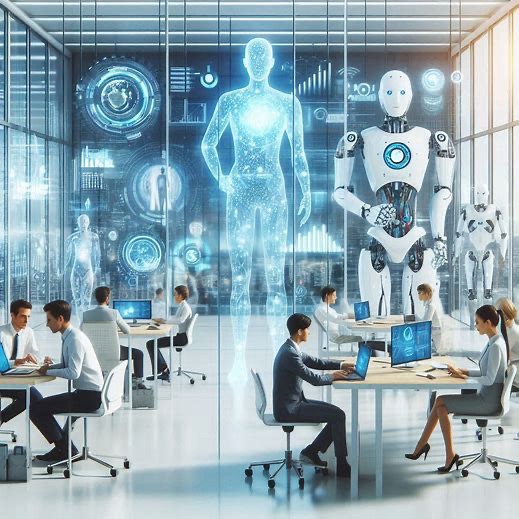
Below is a list of jobs that are increasingly being replaced or affected by AI:
1. Customer Service Representatives
- Why: AI chatbots, virtual assistants, and automated phone systems can handle common customer inquiries 24/7, providing support without the need for human intervention. AI systems are improving in their ability to understand natural language and respond to complex queries.
- Impact: Many first-line customer service jobs, especially in industries like telecommunications, banking, and retail, are being automated.
2. Data Entry Clerks
- Why: Data entry involves repetitive tasks that can be easily automated by AI. Machine learning algorithms and robotic process automation (RPA) can quickly and accurately input data from documents, forms, and spreadsheets without human error.
- Impact: AI and automation software are increasingly taking over data entry, significantly reducing the need for human data clerks.
3. Telemarketers
- Why: Automated systems powered by AI can make calls, deliver scripted sales pitches, and even respond to common customer objections. AI-driven platforms can analyze consumer data to optimize call times and improve the likelihood of successful sales.
- Impact: Many telemarketing jobs are being replaced by AI-driven systems that are more efficient and can handle large volumes of calls.
4. Retail Cashiers
- Why: AI-enabled self-checkout systems, mobile payment apps, and fully automated retail stores (e.g., Amazon Go) are reducing the need for human cashiers. Computer vision and sensors can track purchases, and machine learning algorithms can process payments without the need for manual input.
- Impact: The cashier role is diminishing, especially in big-box stores and supermarkets, where automation is becoming more widespread.
5. Manufacturing and Assembly Line Workers
- Why: Robots and AI-powered machines are taking over repetitive tasks in manufacturing, such as assembling parts, packing products, and quality control. AI systems can work 24/7 with higher precision and speed than human workers.
- Impact: Many jobs in manufacturing and production, especially those requiring manual, repetitive labor, are being automated by AI and robotics.
6. Truck Drivers and Delivery Workers
- Why: Autonomous vehicles (self-driving trucks) and drones are becoming increasingly viable for freight and delivery services. AI systems like computer vision, GPS, and sensors allow these vehicles to navigate and operate with minimal human oversight.
- Impact: The adoption of self-driving technology could lead to significant job losses in long-haul trucking and delivery sectors over time, though full-scale implementation is still a few years away.
7. Paralegals and Legal Assistants
- Why: AI-powered tools can automate many of the tasks performed by paralegals, such as legal research, contract analysis, document review, and case preparation. Natural language processing (NLP) algorithms can quickly analyze vast amounts of legal texts and extract relevant information.
- Impact: As AI legal tools become more advanced, paralegal work is becoming more automated, reducing the need for human assistants in law firms.
8. Bank Tellers and Clerks
- Why: AI-driven banking apps, ATMs, and virtual customer service agents can handle tasks like deposits, withdrawals, account management, and basic customer inquiries. AI is also making loan processing and financial transactions faster and more secure.
- Impact: Many routine banking tasks once performed by tellers and clerks are now automated, leading to reduced demand for these roles.
9. Travel Agents
- Why: Online booking platforms, powered by AI algorithms, allow customers to book flights, hotels, and vacations directly without needing a travel agent. AI systems can recommend personalized travel options based on user preferences and past behavior.
- Impact: The travel agent industry has already seen significant declines due to the rise of AI-powered travel apps and websites.
10. Journalists and Content Writers (for Basic News or Reports)
- Why: AI can now write simple news articles, financial reports, and sports summaries based on structured data inputs. AI-powered content generation tools (e.g., GPT-based models) are capable of generating human-like text for routine news stories, weather updates, or financial reports.
- Impact: While AI may not replace high-level journalism or creative writing, it is starting to automate the production of standardized reports and low-complexity content.
11. Market Research Analysts
- Why: AI and data analytics tools are transforming the way market research is conducted. AI can analyze consumer data, predict market trends, and identify customer preferences much faster and more accurately than traditional methods.
- Impact: Many entry-level market research tasks are being automated, reducing the need for human analysts to gather and process data manually.
12. Radiologists and Medical Image Analysts
- Why: AI systems, particularly those using deep learning, can now analyze medical images (e.g., X-rays, MRIs, CT scans) with remarkable accuracy. AI models are trained to detect abnormalities, tumors, and other conditions faster than human radiologists.
- Impact: While AI won’t fully replace radiologists, it is likely to reduce the number of radiologists required in the future by automating much of the diagnostic process.
13. Stock Traders
- Why: Algorithmic trading, which uses AI to analyze market conditions and execute trades at high speed, has replaced much of the work traditionally done by human stock traders. AI algorithms can make split-second decisions based on vast amounts of data, optimizing trades for profitability.
- Impact: Many stock trading positions, particularly in fast-paced environments, are being replaced by AI-driven trading systems.
14. Tax Preparers and Accountants (for Basic Tasks)
- Why: AI-based tax software can handle simple tax filings, deductions, and returns, reducing the need for human tax preparers. Similarly, bookkeeping and basic accounting tasks are being automated through AI-powered platforms that can categorize expenses, track cash flow, and generate reports.
- Impact: Routine accounting jobs and tax preparation roles are being reduced as AI takes over much of the workload.
15. HR Recruiters (for Initial Screening)
- Why: AI tools are increasingly being used for screening resumes, evaluating candidates based on predefined criteria, and even conducting initial interviews using chatbots. AI can efficiently sift through large pools of applicants to identify the best candidates.
- Impact: While human judgment is still crucial in later stages, initial recruitment processes are becoming more automated, reducing the need for human recruiters for early-stage screening.
Conclusion: Adapting to Change
Many of these roles are not disappearing overnight but are being transformed. Jobs that involve routine, predictable tasks are at higher risk of being automated by AI. However, AI is also creating new opportunities in areas like AI system development, data science, and human-AI collaboration. Upskilling and reskilling will be crucial as workers adapt to a labor market where AI is increasingly prevalent.
In roles that require creativity, emotional intelligence, complex decision-making, and human interaction, AI will likely act as an aid rather than a replacement. The future of work will likely focus on complementing human skills with AI tools, allowing people to focus on higher-value tasks.
 The Artificial Intelligence News Source
Leave a comment